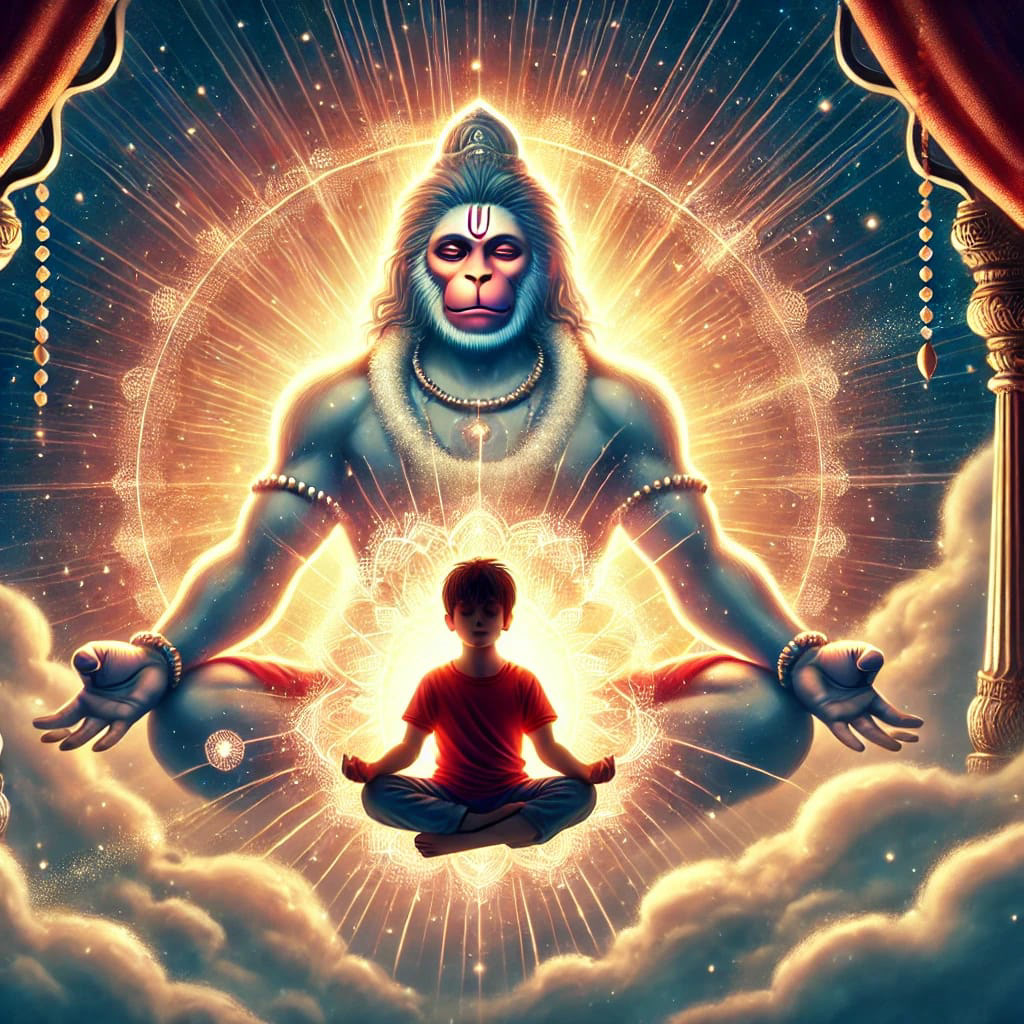
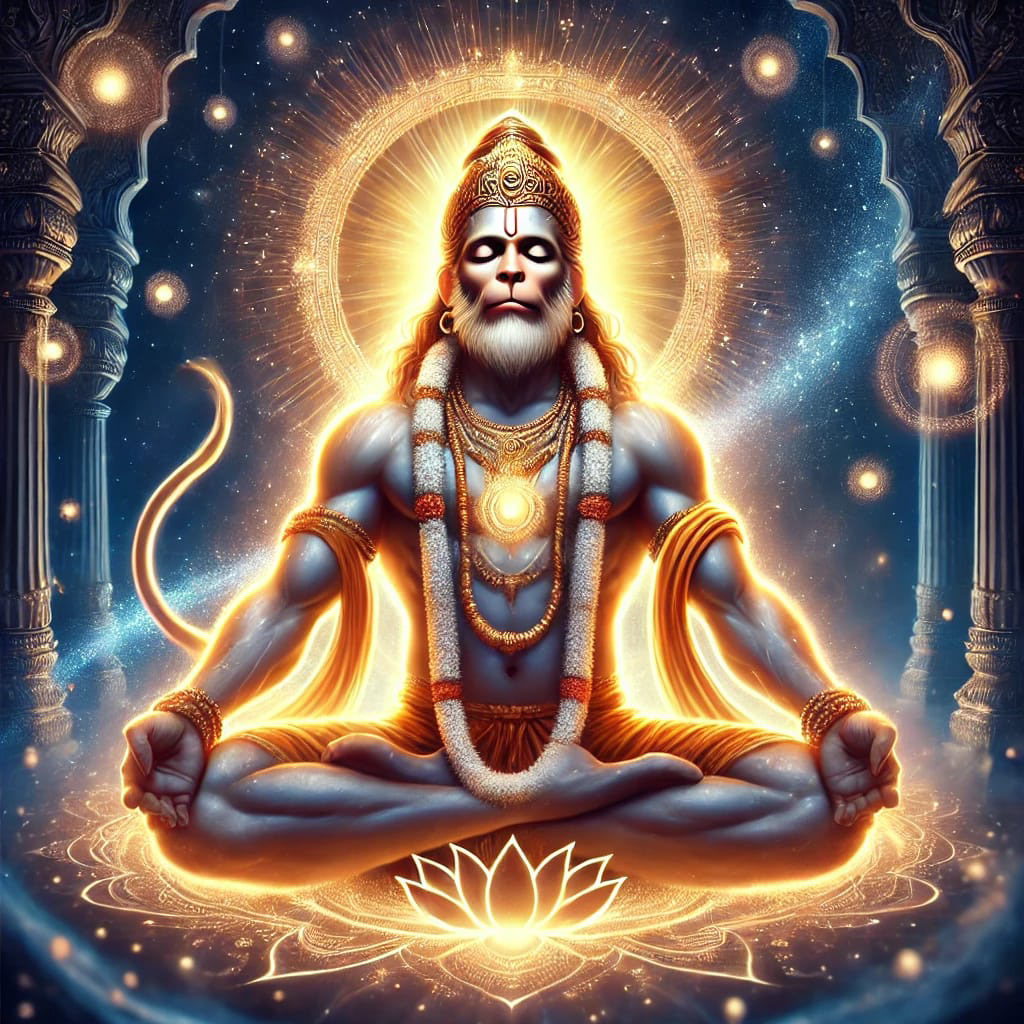
Today, I feel a deep urge to pour my heart out in writing.I have explored many literary works, but I have never read anything like the Hanuman Chalisa.
I believe the most powerful lines of the Hanuman Chalisa are widely misinterpreted. Even literature enthusiasts have not truly grasped their deepest meaning.
I see Hanuman Chalisa as a snapshot of the Bhagavad Gita. Let's discuss some important lines.
These lines from the Hanuman Chalisa highlight Hanuman Ji's immense power in dispelling negative forces and suffering:
1. "Bhoot Pisaach Nikat Nahin Aavai, Mahavir Jab Naam Sunavai"
2. "Naase Rog Harai Sab Peera, Japat Nirantar Hanumant Beera"
What are your thoughts on these lines?
Do you think Tulsidas, while composing this literary masterpiece, was merely referring to ghosts and spirits in Bhoot Pisaach? Or was he pointing to something deeper—perhaps the inner demons of fear, doubt, and ignorance that haunt the mind?
Have you ever heard someone say, *"She’s possessed by the ghost of desire"
Yes! In everyday language, we often hear phrases like "Usko toh paison ka bhoot sawar hai" (She is possessed by the ghost of money) or "Uske sir par naam kamane ka bhoot chad gaya hai" (She is obsessed with earning fame).
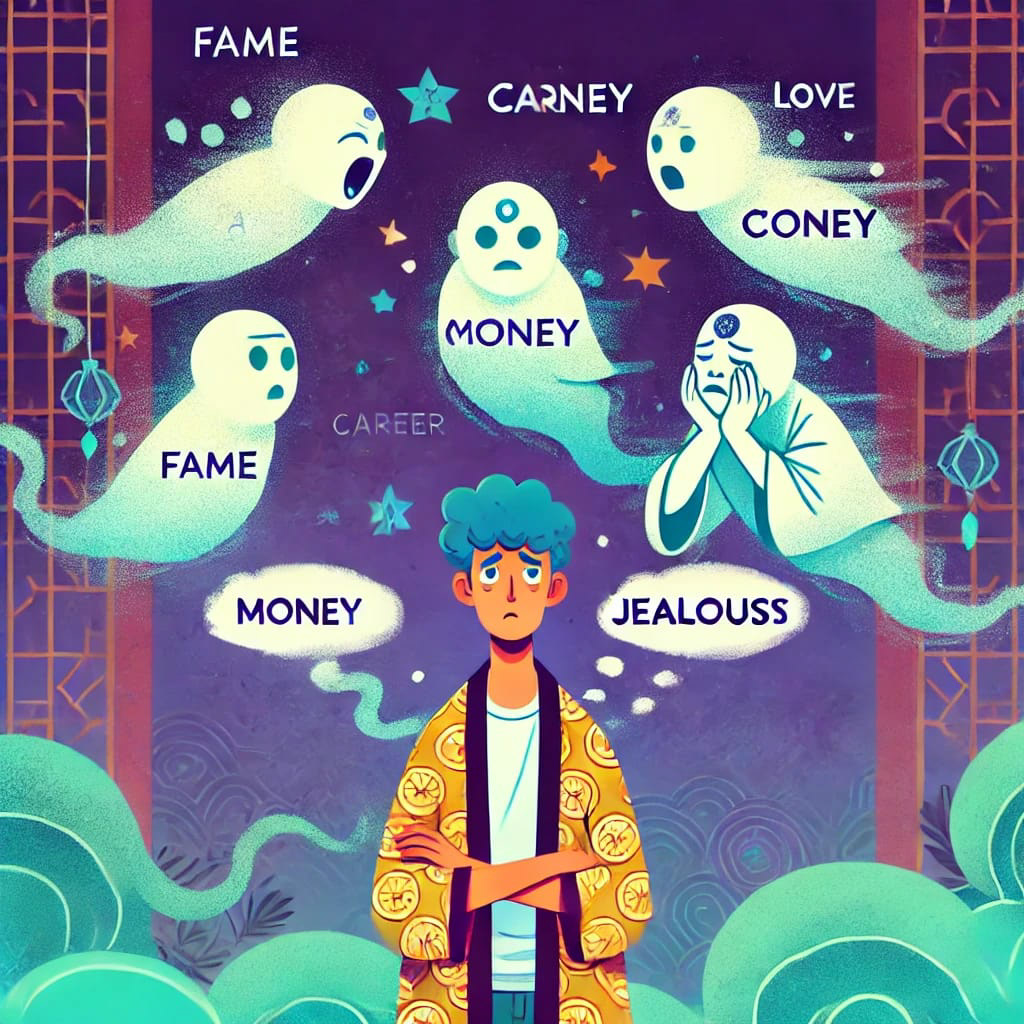
Here, bhoot isn’t about supernatural spirits but rather an overwhelming, uncontrollable desire—whether for success, love, power, or even jealousy. It consumes the mind, much like a ghost taking over.
Maybe Tulsidas, in his poetic brilliance, wasn’t just talking about literal ghosts but also these obsessive, haunting desires that disturb inner peace. Hanuman’s name, in this context, symbolizes the power to break free from such attachments.
Tulsidas is urging Hanuman’s devotees not just to worship him but to embody his qualities—selflessness, devotion, and unwavering strength. He reminds us that those who follow Hanuman’s path, working with the same dedication and detachment, will never be haunted by bhoot—the restless desires of fame, power, money, or jealousy.
Desires only take hold in a mind that has space for them—where ego, anger, and attachment reside. But for those who, like Hanuman, dedicate themselves to nishkaam karma (selfless action), no negativity can disturb them.
This aligns perfectly with the Bhagavad Gita:
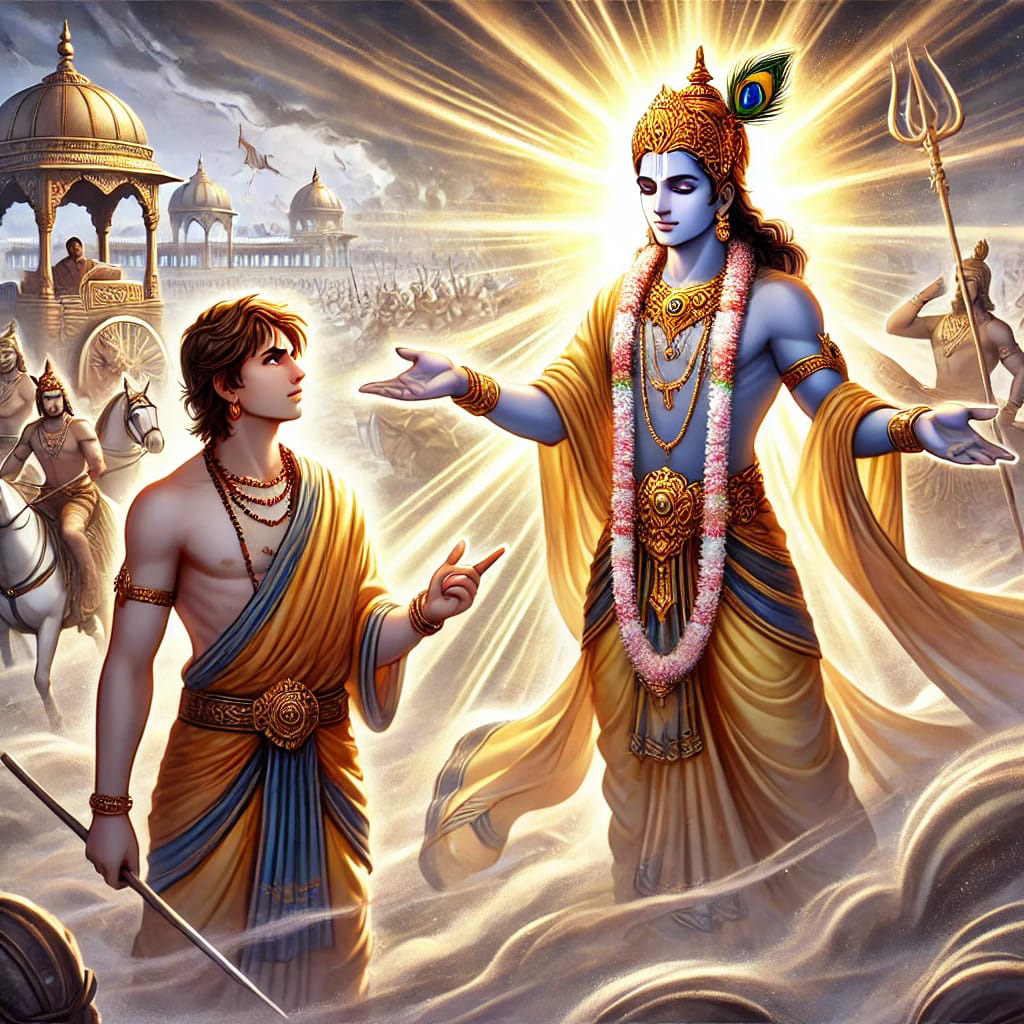
“Karmanye vadhikaraste, ma phaleshu kadachana.”
(You have the right to perform your duty, but never to the fruits of your actions.) — Bhagavad Gita 2.47.
If we take Bhoot to mean "past" or "anything beyond our control should not dominate our minds ," then Hanuman Ji’s message is clear—let go of the past or out of our control things completely. Dwelling on it only holds us back.
By focusing on the present and the future with strength and devotion, we can move forward without fear or negativity (Pisacha).
Do you think someone who is free from jealousy, who lives with the joy and devotion of Hanuman, always smiling and ready to serve, can ever feel stress, anxiety, or depression? Can a person who remains unattached to results but is always eager to do great work (Ram kaaj karne ko aatur) still be trapped by desires?
The lines
"Naase rog harai sab peera, japat nirantar Hanumat veera"
emphasize how chanting Hanuman’s name removes all diseases and suffering.
Hanuman represents unwavering devotion, selfless action, and fearlessness.
A mind free from jealousy, attachment, and ego—one that works tirelessly like Hanuman (Ram kaaj karne ko aatur)—will naturally be free from stress, anxiety, and depression. When one embraces Hanuman’s way of life, living with enthusiasm, strength, and detachment, can any suffering truly remain?
If I have no desire for a luxurious life, I will naturally refrain from alcohol and other toxic habits.
This discipline will keep me in good health—physically and mentally. Without unnecessary stress while working or driving, I can stay focused, reducing the chances of accidents. Fearless and desireless, I can dedicate myself fully to my work without distractions.
This aligns with the Bhagavad Gita’s wisdom:
"Vihāya kāmān yaḥ sarvān pumāṁś carati niḥspṛhaḥ,
Nirmamo nirahaṅkāraḥ sa śāntim adhigacchati."
(One who abandons all desires, moves without attachment, free from ego and possessiveness, attains peace.) — Bhagavad Gita 2.71.
The line "Sab Par Ram Tapasvi Raja" describes Lord Ram as the ultimate ascetic king, a perfect blend of duty and detachment.
"Sankat Te Hanuman Chhudave, Jo Man Karam Vachan Dhyan Jo Laave" from the Hanuman Chalisa means:"Hanuman frees one from all troubles if they focus on him with mind, actions, words, and deep meditation".
This aligns with the Bhagavad Gita (6.5):"Uddhared ātmanātmānaṁ, nātmānam avasādayet"(One must uplift oneself with one’s own mind; never degrade it.)
This verse emphasizes total devotion and surrender.
The line "Jo Sat Baar Paath Kare Koi" isn’t just about mechanical repetition—it’s about deeply embedding Hanuman’s qualities into our consciousness. When something is recalled repeatedly, it becomes second nature, shaping our thoughts and actions.